
Company Culture is not a soft cost; it is a critical driver of performance, productivity, and profitability. In the current landscape of hybrid work and global talent competition, HR is no longer a back-office function—it is a strategic partner powered by technology. This shift is central to how high-performing companies attract, retain, and maximize their human capital. This article explores the pivotal role of technology in redefining workplace dynamics, ensuring your culture attracts, retains, and empowers top talent. Understanding these advancements is key to navigating the future of work.
The Role of HR Firms in Shaping Company Culture
HR firms, acting as strategic advisors, are the architects of organizational culture, ensuring it is intentionally designed, not accidentally evolved. For a C-suite, this means HR’s role is to directly impactbusiness outcomes through
- Values Alignment and Talent Acquisition: HR leverages technology to assess not only a candidate’s hard skills but also their cultural fit and values alignment. This strategic filtering reduces early turnover—which can be up to 33% within the first 90 days—by hiring employees who share the organization’s mission.
- Change Agency: As businesses undergo continuous transformation (M&A, digital rollouts, restructuring), HR acts as the anchor, using clear communication and development programs to ensure cultural values are upheld and employees are engaged throughout the transition.
- Performance and Recognition: By designing data-driven recognition programs, HR establishes a clear roadmap for managers to ensure no contribution is overlooked, directly connecting employee effort to company-wide appreciation, motivation, and ultimately, higher productivity.
Technology Trends Transforming HR Practices
For decision-makers, understanding these trends is the key to unlocking the next level of operational efficiency and employee engagement. For competitive advantage, fostering an innovative culture is now essential. HR firms are strategically using cutting-edge technology—from AI-driven recruitment to sophisticated engagement platforms—to create thriving, productive workplaces.
- Artificial Intelligence (AI) and Machine Learning (ML)
AI/ML is moving beyond simple resume screening to automate complex cognitive processes, enabling HR to focus on strategic human connection:
- Personalized Learning: AI analyzes a worker’s role, current skills, and career goals to create personalized learning paths, streamlining onboarding and upskilling, which boosts motivation and retention.
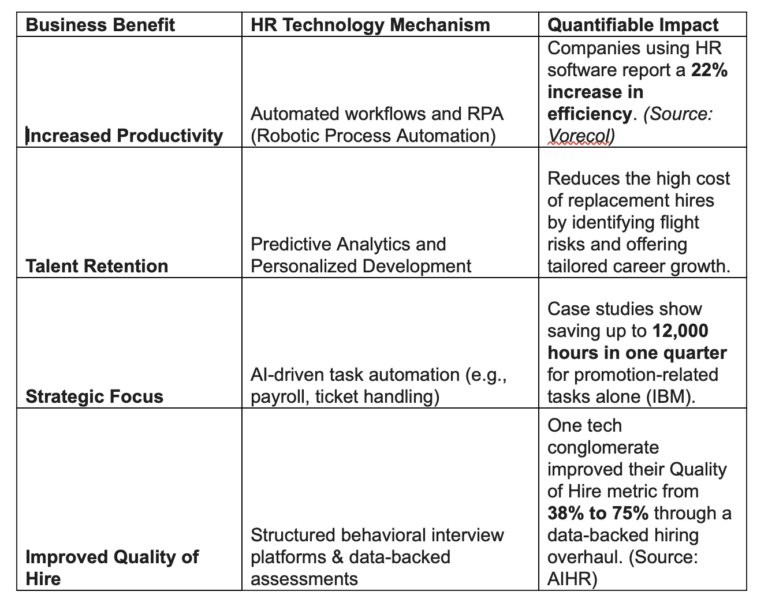
- Process Automation: Automation tools are saving significant administrative time in large organizations. For example, a major financial institution deployed 49 digital workers to automate 60 processes, allowing HR staff to focus on higher-value employee experience tasks.
- Predictive Analytics: AI forecasts turnover risk, identifies future skill gaps, and provides proactive recommendations to managers, shifting HR from reactive problem-solving to strategic risk mitigation.
- Continuous Feedback and Engagement Platforms
Traditional annual reviews are obsolete. Modern platforms facilitate continuous, real-time feedback across remote and hybrid teams. This gives leaders real-time insights into employee sentiment, enabling them to course-correct cultural issues before they impact performance. This shift fosters a culture of transparency and psychological safety.
- Blockchain for Security and Transparency
While still emerging, blockchain technology promises to enhance security and efficiency by providing a secure, verifiable ledger for:
- Credential Verification: Instantly confirming the authenticity of an applicant’s education and work history.
- Data Management: Protecting sensitive employee data and ensuring compliance with global privacy regulations.
Benefits of Leveraging Technology in HR
The investment in strategic HR technology yields tangible, measurable Return on Investment (ROI) by linking cultural strength directly to productivity.
Data-Driven Decision Making in HR
The true value of HR technology is its ability to turn data into a strategic business asset. Modern HR firms are utilizing people analytics to connect workforce activities to business outcomes, giving the C-suite the metrics they need for decision-making.
Beyond simple metrics like turnover, HR is now tracking:
- eNPS (Employee Net Promoter Score) & Sentiment Analysis: Measuring cultural health and willingness to recommend the company as an employer.
- Organizational Network Analysis (ONA): Mapping communication flows to identify key influencers and potential collaboration bottlenecks.
- Learning Impact Tracking: Measuring how training and development initiatives directly translate to higher performance scores and internal mobility rates, proving the ROI of L&D spending.
Remote Work and Its Impact on Company Culture
The hybrid model is the new normal, and HR technology is the bridge between a distributed workforce and a unified culture. The challenge is maintaining cultural cohesion without physical presence.
- Productivity: Studies show that when managed well, remote workers can be 35–40% more productive than their office-based peers, making 40% fewer mistakes (Global Workplace Analytics).
- Inclusivity: Technology enables a globally distributed talent pool. Research suggests that remote work, when handled strategically, can foster a stronger sense of belonging for employees from diverse backgrounds.
- The Culture Challenge: The risk is isolation and information silos. Technology combats this by investing in:
- Collaboration Platforms (e.g., dedicated channels, shared digital whiteboards)
- Culture-Building Tools (e.g., virtual coffee breaks, digital recognition feeds)
- Clear, consistent communication guidelines to replace the spontaneity of in-office encounters.
Future Trends in HR Technology and Company Culture
The next evolution of HR technology will be deeply integrated into the flow of work, making HR support nearly invisible but always present:
- Immersive Technology (VR/AR): Virtual Reality for high-risk safety training, immersive onboarding experiences to establish culture across global offices, and AR for on-the-job performance support.
- The Rise of Skills-Based HR: Technology platforms will move away from static job titles, focusing instead on internal skills marketplaces, allowing HR to match employees’ competencies to internal projects, driving internal mobility and retention.
- Ethical AI Governance: As AI tools become common for hiring and performance, HR will need C-suite guidance to ensure algorithms are free of bias and transparent, safeguarding the organization’s commitment to Diversity, Equity, and Inclusion (DEI).
Conclusion: Embracing Technology for a Thriving Workplace
For the C-suite, the path to a high-performing culture is paved with strategic technology investment. Partnering with a modern HR firm that understands this technological landscape is the most effective way to improve productivity, reduce attrition, and ensure your organizational culture remains a competitive advantage.
As a Deloitte article states “human capital management (HCM) is no longer a back-office system but rather it is, in some respects, the face of the organization to its people. That makes getting it right ‘mission critical’”.
The future of a thriving workplace is one where technology handles the process, and HR handles the people—both working in lockstep to drive the business forward.
To know more:
